Showing posts with label Wastemindedness. Show all posts

Thursday, April 19, 2012

The Garage Sale Trail: all over Australia one huge day of garage sales 5 May '12


From The Garage Sale Trail: Thousands of garage sales all over Australia on one huge day – Saturday 5th May 2012
The Garage Sale Trail is about sustainability, community & creativity. It’s a organisational framework that enables the peer-to-peer exchange of assets, resources and money on a hyper local level but with national scale. Garage Sale Trail is a platform for anyone who wants to make some money or raise money for a cause and for anyone who wants to connect with their community. That’s makers & creators, local business, households, cultural institutions, charities and community groups.
In brief, the Garage Sale Trail is about making sustainability both fun & social and using the Internet to get people off the Internet:
  • The Garage Sale Trail is a program that enables the peer-to-peer exchange of assets, resources and money on a hyper local level but with national scale. It happens all over Australia on one day, Saturday May 5th 2012
  • The Garage Sale Trail is about sustainability, creativity, community and micro-enterprise
  • The Garage Sale Trail is a platform for anyone who wants to make some money or raise money for a cause and for anyone who wants to connect with their community.
  • The Garage Sale Trail is for makers & creators, local business, households, cultural institutions, charities and community groups
  • The Garage Sale Trail a perfect way to discover treasure, de-clutter, have fun, make money, make a positive contribution and make neighbourhood connections
  • You can get involved by registering your sale online, shopping on the day – May 5th 2012 and/or donate to the Garage Sale Trail Foundation
FOR SELLERS:
  • If you are a household the Garage Sale Trail is the perfect way to de-clutter & make a little pocket money
  • If you are a maker or creator, use the Garage Sale Trail as an opportunity to market your wares to an audience who want to discover treasure
  •  If you are a local business it’s an opportunity to connect to your neighbourhood and make positive contribution to your community
  • If you’re a community group or cultural institution the Garage Sale Trail is the perfect way to fundraise and / or connecting to your local community
FOR BUYERS:
  • Garage Sale Trail is the perfect way to discover treasure
  • Garage Sale Trail is the biggest community-based marketplace
  • The Garage Sale Trail is the best way to find a bargain
Use your mobile on the day to find Garage Sales near you: www.truelocal.com.au
Register your garage sale or plan your trail by visiting garagesaletrail.com.au
The Garage Sale Trail website also has some good tips on holding a garage salekeeping your sale green, and haggling for a purchase! – [JB]

Enhanced by Zemanta

Wednesday, April 18, 2012

Gold from garbage - some seem to be getting it right


Environment: Getting Gold From Garbage – 
How Some Are Making Waste A Resource
Source: European Commission
Published Tuesday, April 17, 2012 - 10:36


Top performing Member States have recycling rates of up to 70 % and bury virtually nothing, whilst others still landfill more than three-quarters of their waste. How have the best performers turned waste from a problem into a resource? A new report from the European Commission today explains that it is by combining economic instruments. A mix of landfilling and incineration taxes and bans, producer responsibility schemes and pay-as-you-throw prove to be the most effective tools in shifting waste streams to more sustainable paths.. If the EU is to meet the objectives set out in the Resource Efficiency Roadmap – zero landfilling, maximising recycling and reuse, and limiting energy recovery to non recyclable waste – these economic instruments will need to be introduced more widely across all Member States.

Environment Commissioner Janez Potočnik said: "Waste is too valuable to just throw away, and if you manage it right you can put that value back into the economy. Six Member States now combine virtually zero landfilling and high recycling rates. Not only do they exploit the value of the waste, they have created thriving industries and many jobs in the process. This report shows how they achieved it: by making prevention, reuse and recycling more economically attractive through a selection of economic instruments. We now have a common responsibility with the Member States and local authorities to ensure that these instruments are effectively used and spread across the EU. This is one of the central goals of the Resource Efficiency Roadmap."
Experience in the Member States shows that a combination of the following instruments is the best way to improve waste management:
Landfill and incineration taxes and/or bans – the results of the study are unequivocal: landfilling and incineration rates have decreased in countries where bans or taxes have driven up costs for landfilling and incineration.
"Pay-as-you-throw" schemes have proved very efficient in preventing waste generation and encouraging citizens to participate in separate waste collection.
Producer responsibility schemes have allowed several Member States to gather and redistribute the funds necessary to improve separate collection and recycling. But cost-efficiency and transparency vary greatly between Member States and between waste streams, so these schemes need careful planning and monitoring.
Significant differences between Member States
There are significant differences in waste management between Member States. According to a Report published by Eurostat on 27 March (see STAT/12/48), the most advanced six Member States - Belgium, Denmark, Germany, Austria, Sweden and The Netherlands - landfill less than 3 % of their municipal waste. At the other extreme, 9 Member States are still landfilling more than 75 % of their municipal waste. Recent statistics published by Eurostat show continuous progress in some new Member States, where recycling rates are increasing rapidly. Municipal waste generation has also decreased in several Member States probably due to the economic downturn.
Economic Instruments needed to reach EU objectives
Replicating these instruments in all Member States will be necessary if the EU is to meet the targets set out in its waste legislation and its targets for resource efficiency. This is why the possibility of making their use legally binding in some cases will be assessed in a 2014 review of EU waste targets. The Commission is also including sound waste management in conditions for receiving certain European funds (see IP/11/1159 and MEMO/11/663).
Waste is good business
Meanwhile the Commission is encouraging Member States to implement existing waste legislation more effectively. Waste management and recycling industries in the EU had a turnover of € 145 billion in 2008, representing around 2 million jobs. Full compliance with EU waste policy could create an additional extra 400 000 jobs within the EU and an extra annual turnover of € 42 billion (see IP/12/18). Improved waste management would contribute to achieving several objectives and targets of the Europe 2020 Strategy for smart sustainable and inclusive growth.
More information
The report and detailed results for each Member State:
ESTAT Report on municipal waste management:
STAT/12/48
Study on macroeconomic modelling of sustainable development and the links between the economy and the environment:


Enhanced by Zemanta

Sunday, January 15, 2012

Handling the garbage down Mexico way


Mexico City is twice the size of Melbourne. And it is having problem with its garbage.  The powers that be have recently closed one of the world's largest landfills.  This has brought about illegal dumping of garbage - by the garbage collectors themselves!

Now rubbish is no respecter of persons: the poor, the rich, the intellectuals, and the dumb-bums all make waste and have garbage to dispose of so rubbish is being dumped in some of the posher suburbs of MC.

And it is not only Mexico City that is having problems.  Bogota (with a population 2.5 times the size of Melbourne) and Buenos Aires (half the size of Melbourne) are having problems.  Read more about this here.

To find out what is happening on the continent of South America, please look at the document below. 

Saturday, January 14, 2012

Recycling and Trucks


You might like to pop over to Thomas Hayden's blog, The Last Word on Nothing, and read his post which is titled Trash, Recycling, and the Heartbreaking Lessons of YouTube Ethnography.  And for those of you who are keen on garbage/rubbish trucks you might like to pop over here.

Saturday, December 3, 2011

Cooking Oil to Fuel Western Water Vehicles

Water may be its core business, but now Western Water has turned its attention to a different liquid – biodiesel fuel. The water authority has installed a new 13,000 litre biodiesel tank at the Sunbury depot, to help reduce its carbon emissions.

"Using biodiesel for all our fleet vehicles will reduce carbon emissions by more than 140 tonnes a year,” Western Water’s Managing Director, John Wilkinson, says. “The biodiesel is produced from local waste products such as used cooking oil and tallow, which would otherwise go to landfill,” he says. “This means we are not only reducing carbon emissions from our fleet, we are also putting a waste resource to good use.”

The $25,000 tank is the largest of three now installed by Western Water, with tanks already in place at depots in Gisborne and Melton. The move is part of Western Water’s Climate Change Strategy, which sets a goal of zero net carbon emissions by 2017-18.

“We have already reduced our emissions by almost 30 per cent since 2004-05, and are now aiming to hit 50 per cent by the middle of next year,” Mr Wilkinson says. “Other measures have included retro-fitting energy efficient technology at offices, depots and recycled water plants, and converting to green power,” he says.
“At the Melton Recycled Water Plant, we are capturing biogas produced in the water recycling process to generate 100 per cent renewable electricity.”

BTW, pop over here to read a warning to Sunbury and Macedon Ranges residents on the need for more water saving.

Monday, November 21, 2011

Acquisition and Disposal: the twin peaks of waste, dumping and disposal


This is the BIG QUESTION!
Has your local council satisfactorily resolved 
the Hard Rubbish/Hard Waste on the Footpath issue, yet?


Yarra City Council is home to many environmentally conscious citizens and they display this consciousness with some success at the ballot box. I am sure the Council would consider itself pro-active.

Generally speaking, Councils - and I can only speak from my Melbourne experience - have gone from something like twice-yearly general hard waste collections - put it on the footpath and they will come, between the stipulated dates. - to a "book it, put it on the footpath with a sticker, between the stipulated dates" system.  Councils have gone from a general zonal system to an individualised site specific system complete with mailout and printed sticker


I'm not sure how Councils expect this way of doing things to be cheaper and effective -
and there's a Councillor at Yarra who says it's certainly not cheaper.


To be fair, Councils are between a rock and a hard place on this issue....
  1. It makes sense to give householders regular opportunities to relieve themselves of large items of waste.  No system at all means back to the bad old days and ways - fridges in creeks, mattresses under bridges and so on.
  2. Under the zonal general pick-up system, Councils believed gleaners were an issue leaving footpaths messier than just the original site.
  3. Councils believed gleaners should be deterred and brought in new laws accordingly. Word soon spread (on my advice not justifiable in law) that once hard waste is on the footpath it is then Council property and for gleaners to remove it means that they are stealing and major fines are attached!
Here let me declare my interest.  Miss Eagle is a gleaner and there are few circumstances in which she doesn't glean.  In the long, long ago, before Councils had heard of hard waste on footpaths, I would seek out auction sales, garage sales, second hand shops.  In fact, my first port of call is the hard rubbish on the footpath.  I do admit once that 'Booked' sign goes up, I really do think twice about taking stuff. Some householders are getting too clever by half and tie up items for disposal with rope in such an in-and-out zig-zaggy way that it can be a bit difficult to remove a likely piece.

There are the householders at the other end of the continuum.  They put out big mobs of stuff on the footpath, don't put a 'Booked' sticker on it - or may long after the event. There it is open to everyone and open to rain, hail or shine. Perhaps they think they are being generous to gleaners - and that may be. 

However, all rubbish is not equal. 
Some is grotty, horrible stuff which should be in plastic bags in a rubbish bin.

The reason this blog came into existence is because I am thoroughly cheesed off by what I have seen in my gleaning.  As I have already said, grot is put out which should be in a plastic bag and put in the standard rubbish pick up.  Some is recyclable and could go in the blue (or whatever your recycling colour is) bin.  Above all, so many in my neighbourhood are only five minutes or less away from the Salvos and Vinnies and don't seem to be bothered to take appropriate stuff there.

I don't want to appear an ungrateful gleaner but a few facts have to be remembered at the gleaning end:
  1. Just as all rubbish is not equal, all gleaners are not.
  2. Some gleaners break and pull things apart and generally make a mess as they fossick and glean.
  3. Some, like me, are the opposite. We try to place things back as they were. We deliberately set out NOT to make a mess.
  4. Where the householder is around, permission is asked.
  5. People glean for different things. I once met a man with a ute and a disability collecting metal to sell to a scrap-metal dealer.  This was to eke out his disability pension.  I glean houshold and gardening items.  I have been renovating furniture for forty years.  I have a good eye for making useful, even beautiful, what others reject.  This gift has been passed on to my children and my daughter has passed it on to her partner.  What I seek the metal collector will pass by and vice versa.
  6. There are professionals. My daughter met last year the owner of a well-known antique shop in a well-heeled suburb as he was gleaning too. He explained that the second hand section accessed by a separate entrance at the rear of the antique shop had seen his business through many a lean year.  And why not? Small business faces continual pressures and hardships that Wall Street and Reserve Banks don't recognize nor do they understand.   
So how does all this get sorted out?

Firstly, we have to realise that rubbish will always be with us and will never be entirely eliminated. Aboriginal midden heaps of great antiquity are still with us and some are  protected by government.
Secondly, we have to realise that gleaners will always be with us and will never be entirely eliminated. I jokingly say that we gleaners are the third oldest profession - after the first two unmentionable ones. We are mentioned in the bible
It is suggested that most gleaners are women. I would modify this statement because in very poor populations across the word, the gleaners are often children.
So we have two irresistible forces. We have rubbish - far too much of it.  We have gleaners - but probably not in sufficient numbers to spirit the waste off Melbourne's footpaths.

We have health factors to consider.

I think that, to deal effectively and cheaply with disposal of rubbish, we have to focus on the diminution of rubbish and waste.  We are already making inroads at the household level so that we can say with a degree of certainty that there is a good level of understanding about recycling.  This comes at the disposal end.  What we lack is a satisfactory level of understanding about acquisition.  

Acquisition is a behaviour that dares not speak its name.
Acquisition provides a lot of business.
Acquisition provides a lot of jobs.

Public education programs are needed so that people consider acquisition and its impact. 
 More stuff,more storage, more storage, more outgoings, 
more outgoings, more credit, more credit more interest, 
more interest less savings, less savings less superannuation....
PLEASE CONSIDER!


Monday, October 3, 2011

Please Don't Dump It: dispose of thoughtfully

Home from a morning walk.  Now that - hopefully - the worst of a Melbourne winter is past, I am trying to start with a positive outlook.  I set off about 5.30am. Currently, the temperature is about 2degrees.  I came home with frozen, hurting hands in spite of gloves.

There's nothing like exploring your suburb when the majority of the population are still abed.  I live right in the middle of a major urban hub so the morning quiet is a good time for window shopping in places that one has to whizz past because of the major pace of traffic.

It was in this "window shopping" mode that I noted the boxes of stuff outside the local Salvos. 
Now the stuff outside my local Salvos was not of this quantity.

But the gleaner in me had to check out what was there.

I regularly complain about people who put good stuff out on their footpath.
Gleaners like me can take it - and hopefully will.
Because, with the sort of weather we have in Melbourne,
if unwanted goods are not disposed of thoughtfully,
rain and heavy weather will severely damage otherwise useful stuff.

But it is amazing how many people will not drive the few minutes to 
the Vinnies or the Salvos and give their stuff to the people 
who can maximise the opportunity.

At my local Salvos, I discovered that some people get there -
yet dump stuff that shouldn't be there:
empty Coke bottles, little empty boxes with rubbish in them.


Across the road at Vinnies, there was much more stuff outside their store.
About the same quantity as in the picture above.
As far as I could tell, it was not rubbish.

So please, when you are spring cleaning or moving house,
please dispose of your unwanted stuff thoughtfully.

  • Send your still useful and usable stuff in a clean state to your favourite charity.
  • Put recyclable material in your recycling bin. 
  • For larger and electrical items, please check with your local Council on how to dispose.
  • Put real rubbish in your rubbish bin.  
  • Please aim to keep material for the rubbish bin to the absolute minimum.

Monday, September 19, 2011

Conscious Consumption: Fashion


Over at Next Starfish, there is a guest post there by Mrs Green from My Zero Waste.

It is about living an ethical lifestyle in terms of fashion.  To whet your appetite, here are some of the headings in the post:

Green Consumerism
Less is More
Fibres
Labour 
Vintage Fashion
End of Life

Developing an ethical lifestyle means thinking, reflecting before acting: 
  • thinking of the consequences that might ensue from your action/s; 
  • reflecting on the moral implications of what you are doing or about to do.

Friday, September 16, 2011

Wastemindedness and Australians

Human waste is a major problem in the 21st century.  Across human history we haven't been too fussed about where we have disposed of the waste of our daily lives and work.  After thousands of years, particularly the last few hundred since the industrial revolution, our history is catching up with us in the form of our detritus.

Waste is costing us money.  Waste is despoiling our environment and exposing ugly corporate practices. Waste is destroying health and causing us to leave our homes.

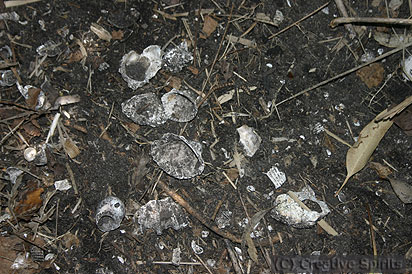
Waste has been and always will be with us.  Pre-industrial societies produced waste and our discovery of their waste informs our knowledge of them.

Aboriginal shellfish midden - Stradbroke Island, Queensland.

Modern society is producing masses of waste due to large populations, intensive consumption and highly manufactured products.  We are not only producing waste that is hard to dispose of because of its quantity.  We are producing waste that is dangerous to health because of the sophistication of manufactured products and the materials used in that manufacture.  We are aware of this - because we are very keen on sending that waste somewhere else.  


Humanity - and that includes my countryfolk in Australia - is living in cloud cuckoo land with regard to waste.  We are killing everything we rely upon for a good life: our own health; our own environment; our own water and air. Australia has not faced the music on the waste-front yet.  It is certainly not demonstrating that it is prepared to pay the piper - in fact, face the real cost of living in the form of the cost of waste.  

The light is dawning for some.  These are the people who are curtailing their consumption; living simply; purchasing ethically; mindful of how they dispose of possessions.  These are thoughtful, reflective steps - but they are small ones being made by small numbers of people.  Waste-mindedness has not infected the whole of Australia - yet.  Waste-mindedness has not yet hit the mainstream of Australia.  It is high time it did.